Watching Closely

I’ve watched Buy Now: The Shopping Conspiracy on Netflix twice.The first time was last year, somewhere around Black Friday — a moment when consumption is at its loudest. It left me uneasy. Not shocked, but unsettled. The second time, I watched it againbecause it stayed with me. The discomfort lingered, opening up thoughts I knew I needed to sit with — and eventually share.
Having spent years working in retail, and of course being a shopper myself, much of what the documentary reveals felt deeply recognisable. Not because these tactics are hidden, but because they’ve become so normalised in how we shop, browse, and consume that we rarely stop to question them.
This documentary isn’t really about shopping.It’s about systems — and how they are carefully designed to keep us buying, upgrading, and wanting more.
We often say less is more in fashion. But are we actually living by it?
Overconsumption Is Designed
One of the documentary’s strongest messages is that overconsumption isn’t driven by individual failure — it’s engineered. Endless product drops, limited-time urgency, algorithm-led recommendations, and frictionless checkouts leave little space to pause and think.
Shopping once required effort. Today, it’s a click. And that ease has quietly reduced the time we spend critically thinking about our purchases.


Watching It Through a Fashion Lens
As someone rooted in fashion, the parallels were impossible to ignore. Trend cycles move faster than ever. Micro-trends appear and disappear in weeks. Newness is constant. Clothing has shifted from something we live with to something we simply scroll past.
I think about the clothes my mother bought — remembered, reused, shared — compared to today’s wardrobes filled with pieces we barely recall buying.
The System Deserves Closer Attention
What Buy Now does well is invite us to look beyond individual choices and consider the systems that shape them. It doesn’t frame creativity, branding, or marketing as problems in themselves — and that distinction matters to me.
Coming from a background in visual storytelling and merchandising, I see these tools as powerful forms of communication. When used thoughtfully, they can inspire connection and meaning. The challenge arises when they function within systems that prioritise speed over care and volume over value. Many people working in fashion and retail are operating within structures they didn’t design — ones that quietly reward constant growth and replacement.
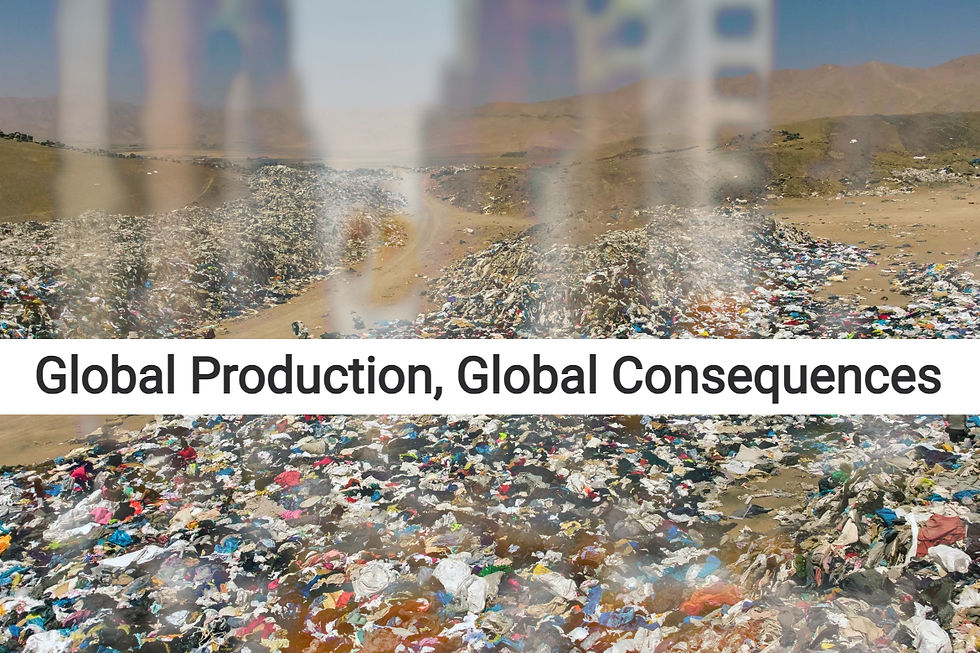
One of the most uncomfortable truths the documentary touches on is where waste ends up. Excess production doesn’t disappear — it travels. Waste is shipped across borders, often to weaker economies that pay the price through environmental damage and human health.

What Buy Now left me thinking about most was what isn’t explored enough: alternative systems.
Circular economy thinking offers a powerful counterpoint to the buy–discard–repeat cycle. It asks different questions:
How long is this meant to last?
What happens when I’m done with it?
How can value be preserved, not extracted?
In fashion, circularity means designing with the end in mind — prioritising repair, reuse, resale, remaking, and emotional longevity. It’s not about removing joy from fashion. It’s about deepening it.
Choosing Awareness Over Guilt
Buy Now doesn’t ask us to stop shopping. It asks us to become more aware of why we shop the way we do. Awareness creates choice — and choice creates change.
In that sense, this documentary didn’t just challenge me. It reminded me why slowing down, questioning systems, and rethinking fashion still matter.
And that’s why, in its own way, it stole my heart.


Comments